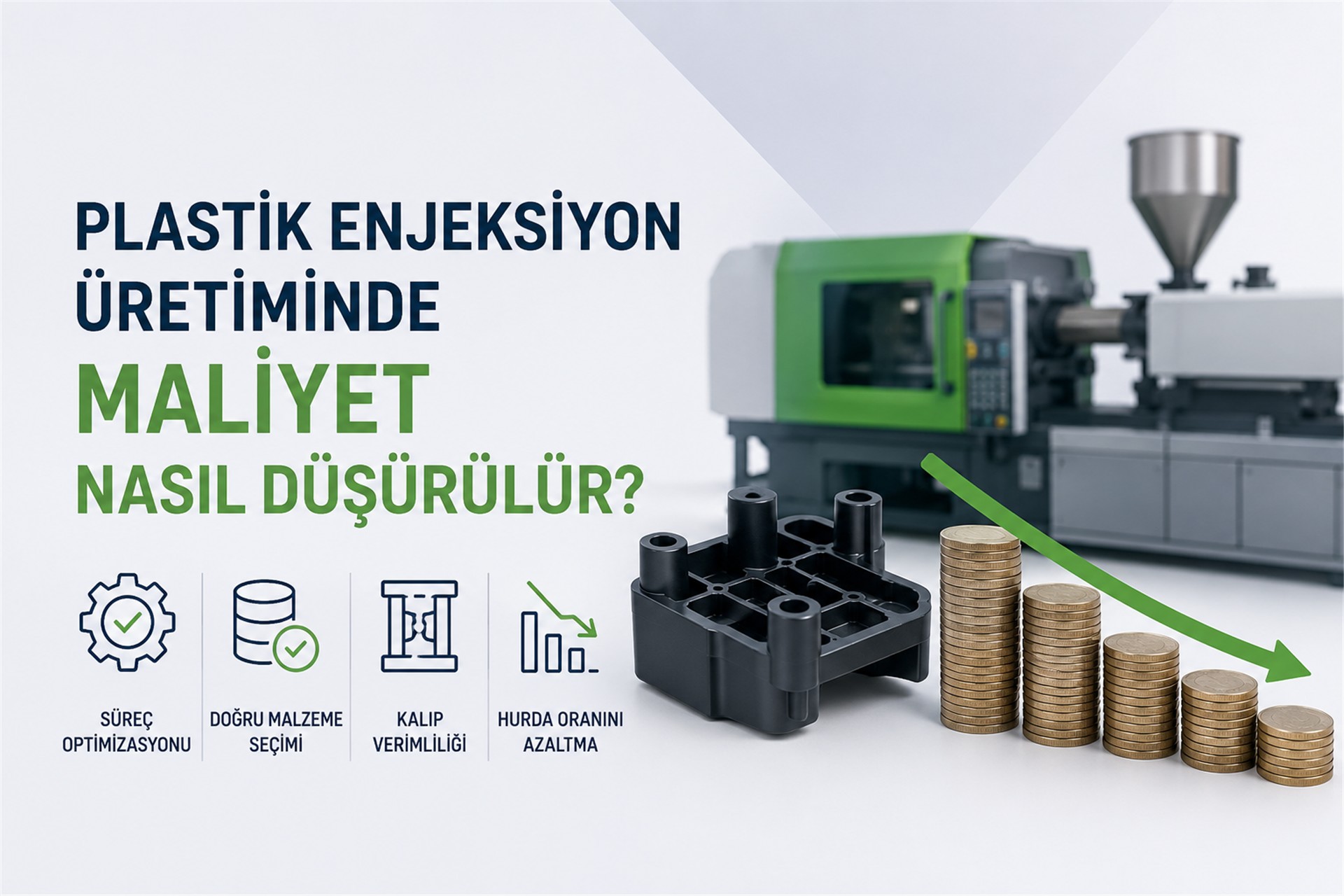
How to Reduce Costs in Plastic Injection Manufacturing
Contact us via Whatsapp
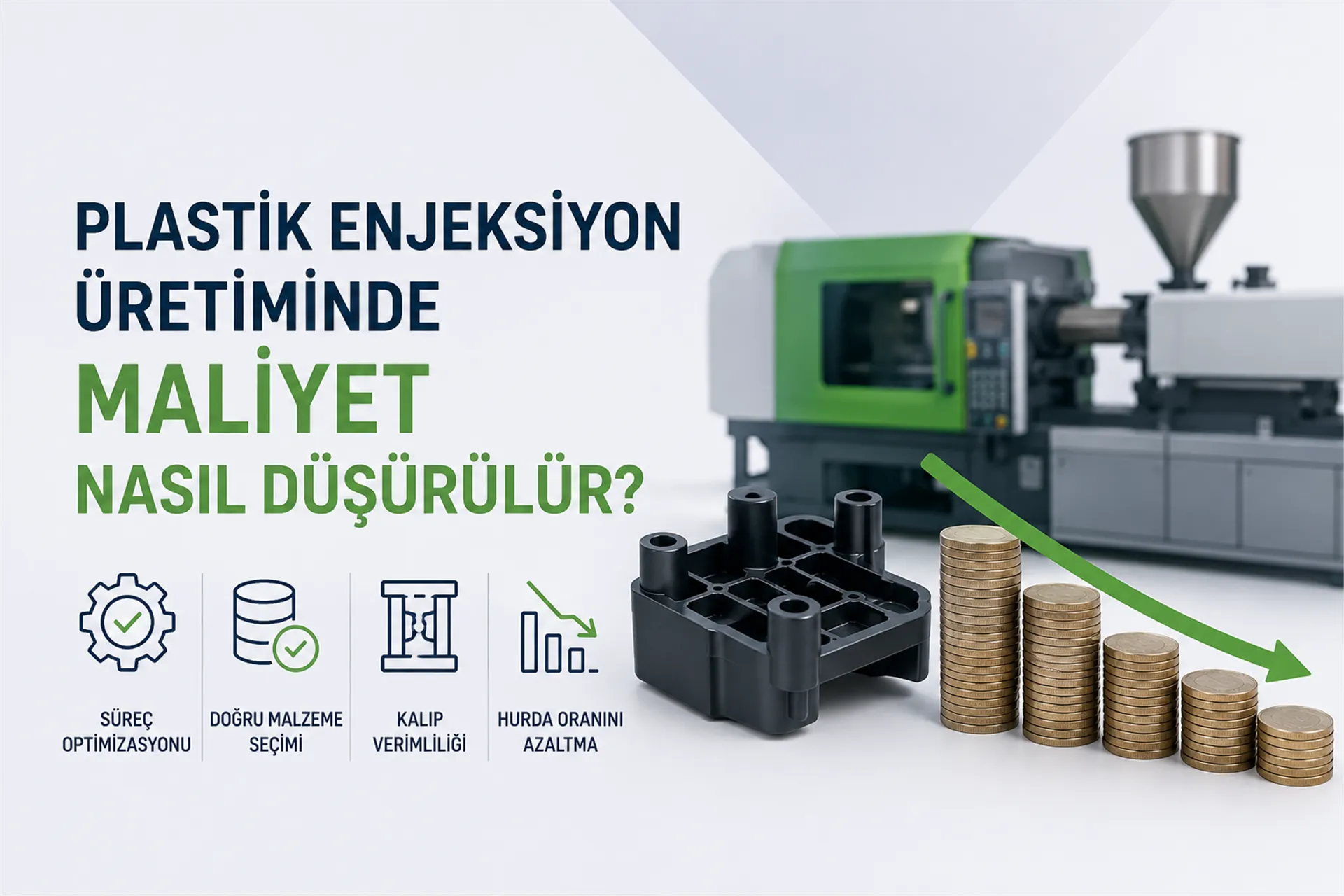
How to Reduce Costs in Plastic Injection Manufacturing
Cost Optimization in Plastic Injection Manufacturing
Plastic injection manufacturing offers significant potential for reducing unit costs due to its suitability for mass production. However, to fully benefit from this advantage, production processes must be properly planned and optimized. Raw material selection, mold design, machine efficiency, and production parameters all directly affect overall costs.
Cost optimization does not only mean reducing expenses; it also involves improving efficiency while maintaining product quality. Poorly planned production processes can lead to higher long-term costs and production losses.
Impact of Mold Design on Costs
Mold design is one of the most important factors affecting production costs in plastic injection manufacturing. A properly designed mold reduces cycle time, minimizes waste, and lowers maintenance requirements.
When cooling systems, runner design, and part geometry are optimized, production cycle times can be significantly reduced. This directly lowers unit production costs. In addition, using high-quality steel extends mold life and provides long-term cost advantages.
Raw Material Selection and Cost Balance
The type and quality of raw materials used in plastic injection manufacturing have a major impact on cost. Using unnecessarily expensive materials increases costs, while low-quality materials may cause product defects and return expenses.
Therefore, material selection must balance both product performance and cost efficiency. In some cases, the use of recyclable materials can also provide cost advantages.
Optimization of Production Parameters
Injection molding machine parameters directly affect production efficiency. When injection pressure, temperature settings, cooling time, and cycle time are properly optimized, production time is reduced and energy consumption decreases.
Incorrect parameter settings can reduce product quality and increase scrap rates. Therefore, production processes must be controlled by experienced operators.
Role of Automation and Technology
Modern plastic injection facilities use automation systems to significantly reduce production costs. Robotic systems minimize human error while increasing production speed.
In addition, Industry 4.0 solutions enable real-time monitoring of production processes, efficiency analysis, and reduction of unnecessary energy consumption. This provides significant long-term cost benefits.
Maintenance and Process Management
Regular maintenance of molds and machines is critical for production continuity. Unplanned downtime can cause production losses and additional costs.
Scheduled maintenance programs extend equipment lifespan and ensure more stable production processes. This contributes to overall cost reduction in manufacturing operations.